L'île de Gorée
- Annika Graber
- Jan 25, 2022
- 3 min read

written 21 january 2022

Today was our first field trip of the program. During orientation week we spent a few sessions going over the history of slavery in Senegal, which is very crucial in understanding the island of Gorée. What’s super interesting about this program is that we are able to first learn about the history, then visit the sites for context.
Our morning started off a bit rough… we all thought we were getting picked up at 10 am, but were woken up at 9 am due to a miscommunication. Unfortunately, it’s a common trend so we are getting used to getting ready in less than 20 minutes. Anyway, we took taxis to the port and boarded a ferry to the island. On the ferry, different women came up to us and told us their names and where to find their shops. They said each chooses one person (tourist) to visit the shop. They ride the ferry back and forth to pick out customers. I guess that's one way to share business.


The island from the ferry

The port on the island is a picture of colorful island life.
The history of the island is marked by many conflicts, that extend into today. Historically, most of Europe wanted control of the island because whoever controlled the island, controlled the slave trade. It is now a UNESCO historical site, which further complicates its position. Although it is important to preserve the memory of what took place, because it's a UNESCO site certain standards must be upheld to preserve the buildings and area. The citizens of the island, therefore, have to adhere to the standards, while continuing to live on the island. Many derive their income from tourism and also seek to create their own culture. The island cannot avoid the complicated mix of culture, economics, and politics.


The island itself is beautiful. It is hard to ignore history, but the bright colors provide a stark contrast to the dark past.
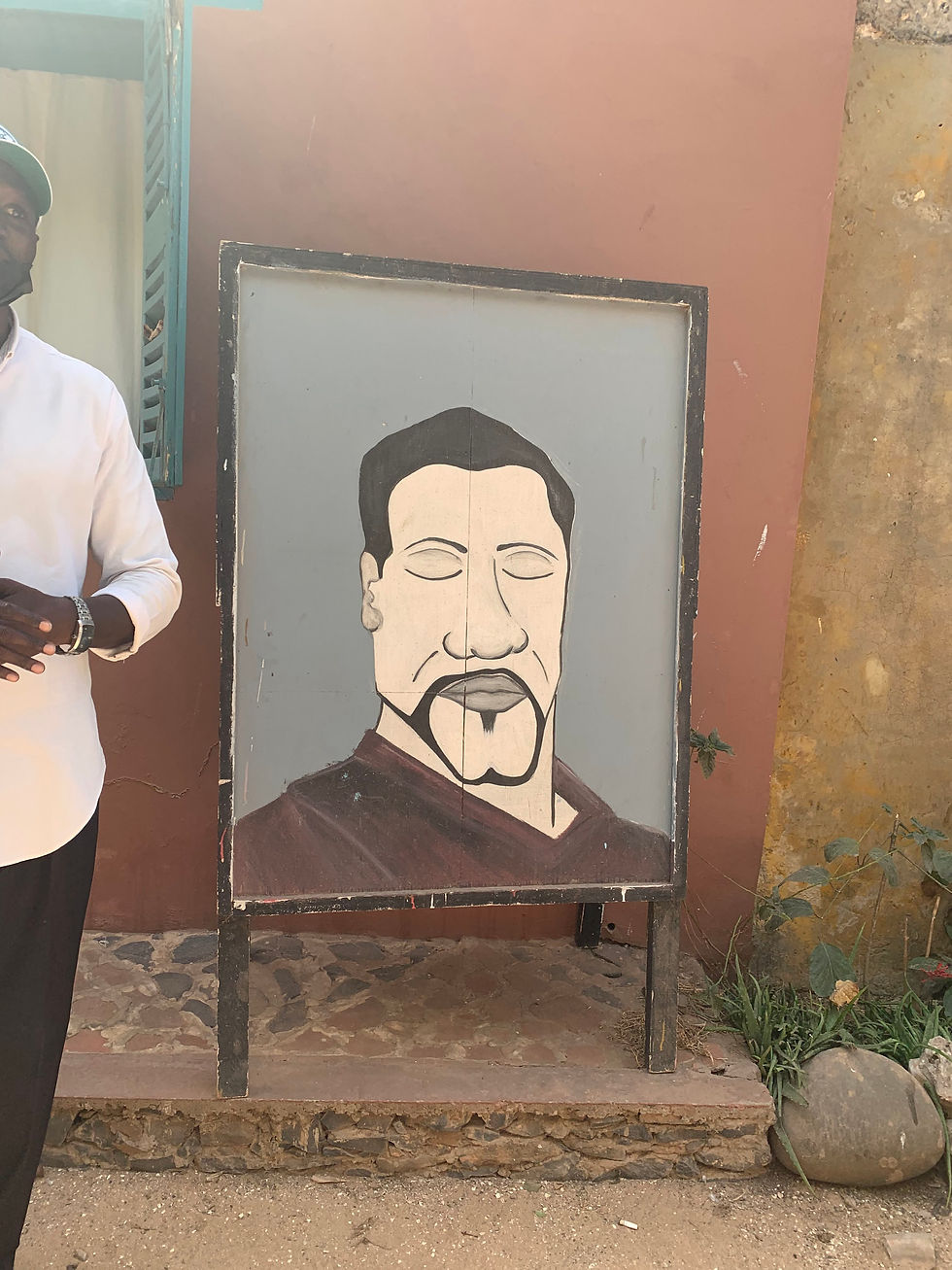
Our first stop was La Maison d’Esclaves (The slave house). I’m going to write a separate blog on the site as there was a lot of information. After la maison we took a tour of the remainder of the island. Our guide was so knowledgeable on the history of Senegal throughout any period of time- so any facts are thanks to him. I didn’t quite catch all of the nuances of its history, but there are still strong feelings towards independence. We walked by an image of George Floyd which was strongly regarded here as well.
We also walked by a girl’s high school on the island which hosts the 30 top girls of the country for each grade. The school is named after author Mariama Bâ. Her book, So Long a Letter explores gender roles in Senegalese culture. It's a quick read and an interesting perspective.
We then stopped by an artisan shop, where artists make tableaus out of sand. They went to school for 3 years to learn the skill, then came back to the island to work.


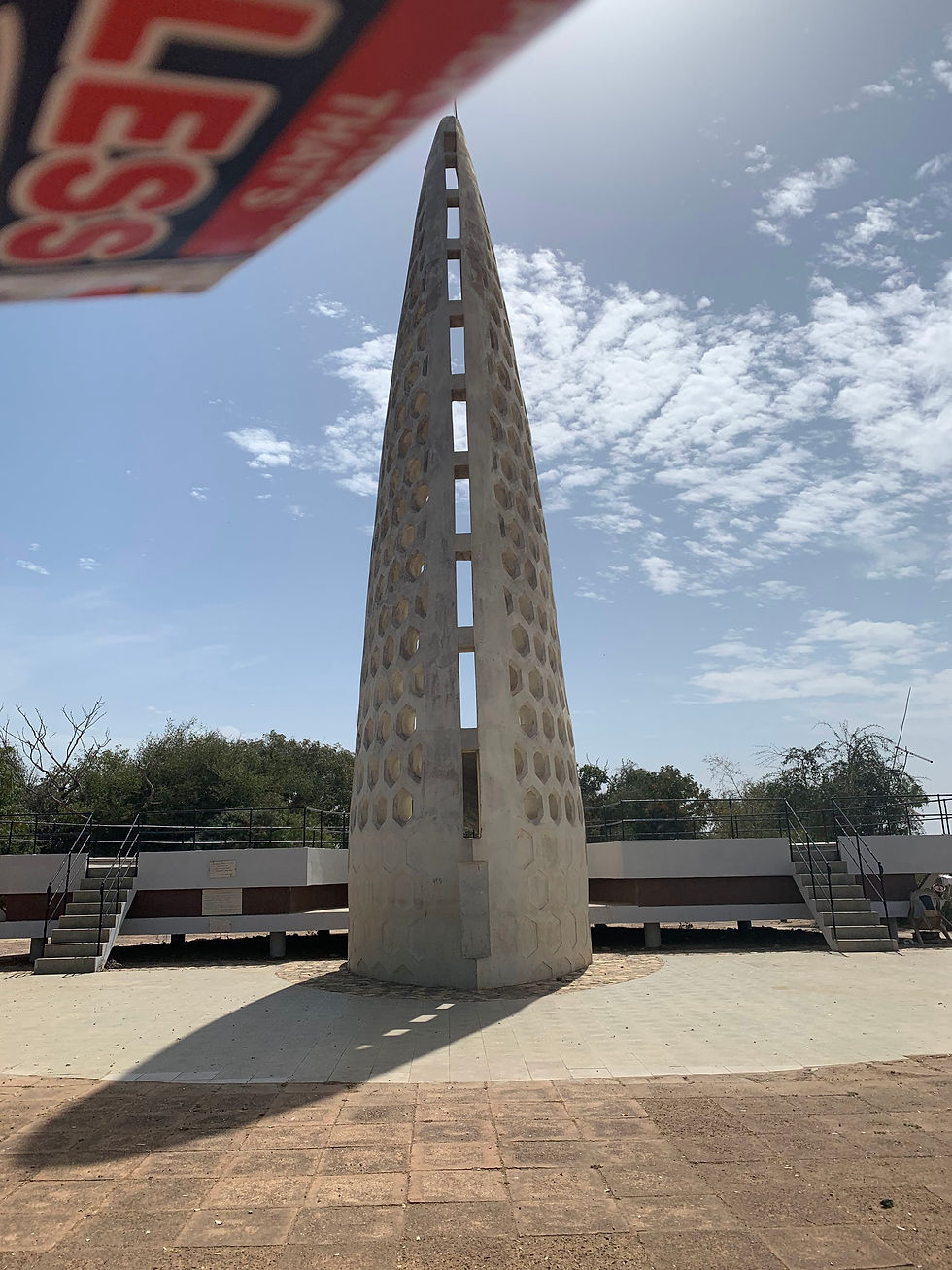
From there we hiked to the top of the island. There sits a monument in remembrance of the exploitation of humans.

The top of the island also contains abandoned cannons and bunkers left by the French to defend the island. The cannons were used only once to sink an English ship. As a result, each time the ferry comes to port, it has to take a detour around a certain buoy (to either avoid the shipwreck or out of respect... I didn't quite catch the reasoning).
When the French decided to abandon the island, it was too expensive to transport the cannons so they cut holes in the side of the cannon so they would not launch in a straight line.

They then turned the cannons to face inland and cut the wiring underneath. Again, the citizens of Gorée must grapple with European influence as they utilize the remaining bunkers for everyday life.
We then passed a memorial for the victims of yellow fever that wiped out the island. The illness acted as a catalyst for the French departure as they realized once something happened on the island, it was difficult to avoid. They also burned down the hospital after their departure.

For lunch we had fish. During lunch, the ladies we met on the ferry found us and waited patiently for us to finish eating. Then as soon as we stood up they rushed to us and really, really tried to lead us to their shops. It was hard, but I managed to resist saying “non merci” too many times to count. We relaxed on the beach then headed back.


Comments